

Written May 25, 2026
Transcript:
The United States is tightening its doors to permanent residency. In a major shift in its green card process, Washington has announced stricter rules for migrants already living in the country on temporary visas. For decades, many migrants already living in the US could apply for permanent residency through a process known as adjustment of status. This process allowed applicants to apply for a green card from within the United States. It also allowed many migrants to continue living and working in the country while their applications were being processed. So what exactly is this new policy and which group of migrants are expected to be affected the most? Well, the new policy has been issued by the US Citizenship and Immigration Services or the USCIS. It now treats adjustment of status as what officials describe as an extraordinary form of relief. Officials say most applicants on temporary visas will now have to leave the United States as they will be required to apply from their home countries through consular processing. The move is expected to significantly affect Indian professionals living and working in the United States, many of whom relied on this route while waiting for their green cards.
US Citizenship and Immigration Services today announced a new policy memo reiterating the fact that consistent with long-standing immigration law and immigration court decisions, aliens seeking adjustment of status must do so through consular processing via the Department of State outside of the country.
This policy is expected to affect students, tourists, and temporary workers currently living in the United States. It could especially impact people on H-1B work visas. People on F1 student visas and H4 dependent visas could also be affected. Many of them traditionally relied on adjustment of status while waiting for their green cards. Now, this comes as the US Secretary of State Marco Rubio is on a 4-day visit to India. Speaking during the visit, Rubio responded to concerns over America’s tightening immigration policy, saying the changes were part of what he described as a transition towards a better and more efficient immigration system.
The United States, I believe, is the most welcoming country in the world on immigration. Every single year roughly a million people become permanent residents of the United States and contribute greatly.
The policy is particularly significant for Indians. Indians dominate the decades-long backlog in employment-based green card categories such as the EB2 and EB3. EB2 and EB3 are employment-based green card categories. They are mainly used by skilled professionals, degree holders, and other foreign workers seeking permanent residency in the United States. Now for many Indian professionals the wait for permanent residency already stretches beyond 15 to 20 years and the Trump administration however says the policy restores the original intent of US immigration law.
USCIS officials argue that temporary visa holders are expected to leave the country after their authorized stay ends. Officials say permanent residency should instead be granted through the proper process abroad. The administration also says the move will help reduce visa overstays. Officials further argue that the policy will discourage the misuse of the immigration system.
Following the law allows the majority of these cases to be handled by the State Department at US consular offices abroad and frees up limited USCIS resources to focus on processing other cases that fall under its purview, including visas for victims of violent crime and human trafficking, naturalization applications, and other priorities. The law was written this way for a reason. And despite the fact that it has been ignored for years, following it will help make our system fairer and more efficient.
But soon after the policy memo triggered concerns among migrants, USCIS issued a clarification. Officials said the policy is not an absolute blanket ban forcing every H1B visa holder to leave the United States for green card processing. According to USCIS, some applicants may still be allowed to apply from within the US that would be granted in what officials describe as extraordinary circumstances. Cases involving economic or national interest benefits could also qualify for exceptions.
Now, since the beginning of Trump’s second term, several immigration related measures have raised concerns among migrants and foreign workers. These include proposals linked to higher salary thresholds for H-1B visa holders. The administration has also pushed for stricter social media vetting. Student and work visas have also faced tighter scrutiny. Travel restrictions on certain countries have also been expanded. Recent data also shows that H1B visa registrations have been dropping by around 38.5%.
Critics say the decline reflects the Trump administration’s tougher immigration approach. Now, Indian workers are expected to be among the most affected by the tighter immigration measures. According to 2024 data, Indians account for around 71% of the approved H-1B visa applications in the United States.
Years of hard work, a dream of building a life in America, decades spent waiting for permanent residency, and now many migrants are being told that staying in the United States while applying for a green card could be treated only as an extraordinary form of relief.
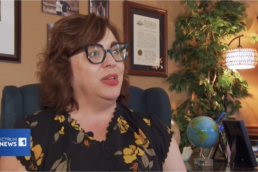
Now, for more on this, we are joined by Rosanna Berardi. She is a managing partner at Berardi Immigration Law and an immigration lawyer based in Buffalo.
Welcome to the program, Rosanna.
Thank you. Nice to be here.
Rosanna, very quick reaction on this situation here. Is this something you’ve been watching immigration policy for most of your career I assume, especially during this Trump second administration? Was this something a long time coming, something that has been expected, or is this worrying you even more?
Well the Trump administration dropped a bomb on the immigration law community as well as all foreign nationals in the US the Friday before a long holiday weekend in the United States. We were not expecting this. I think everybody in the community is just so shaken by this because while Trump is committed to fixing immigration, legal immigration is something that works in the United States. It’s incredibly difficult to obtain immigration status in the US and people that follow the law are rewarded for that. Now, that concept’s been turned on its head, and this memo says, “Well, you might have done everything right, but we still might not give you the benefit that you’re entitled to.”
But what exactly is the streamlining process that Secretary of State Marco Rubio is talking about here when he says that this process is actually restoring the original intent of immigration law and making America the most welcoming country for immigrants? How does that coincide with what’s going on?
Well, respectfully, I have to disagree with Mr. Rubio on that one. The Immigration and Nationality Act clearly allows for adjustment of status. When you apply for adjustment of status, you have to have a background check. You have to have a medical exam. You cannot be a criminal and get adjustment of status. So, frankly, I think that soundbite is completely invalid. And this is an area of the law that works. There are no loopholes here. People follow the law. They play by the rules. They get their green cards. To assume or insinuate anything else is merely insulting.
And this affects H1B visas. This affects students with master’s degrees, very high-level talented people. How does this impact the types of immigrants in the US? Why would they be the targeted ones that would have a harder time staying? Any rationale for this at all?
So, respectfully, my opinion is this administration is obsessed with fixing immigration. That’s what they were elected upon during the campaign trail. They wanted to fix immigration. Well, we first heard that they were going to deport 1 million people from the United States. That didn’t happen. Why? There are legal challenges. Next, what are they going to do? They’re going to attack people in the United States and go after legal immigration. This administration does things without notice, without warning, without any legal foundation to back it up, and likes to shock and awe the foreign national community in the United States that I’ve represented for over 30 years. This is just another attempt by the administration to say America is closed and we are going to try and maneuver and manipulate the immigration law that Congress clearly set out more than 30 years ago to allow this type of immigration.
Rosanna, is this something that you see persisting over time and a long-term situation? You said America is closed. Will this impact long-term people that are viewing America as somewhere that they do want to contribute, where they do want to immigrate to and where they do want to study? How’s that going to impact in the long term?
Well, the Trump administration is sending the message loudly and clearly that America is closed. I can tell you personally that it’s not because we represent thousands of clients every year that are coming into the US. But it’s that messaging piece that is trying to scare people out of coming to the United States. And that is just absurd.
We have immigration laws. They’re on the books. We utilize them all day long. We get thousands of work permits and green cards. So, America is very much open. But this is an administration that is really trying to manipulate through policy memo and sidestep Congress and trying to say otherwise.
Restoring the integrity, that’s garbage. These are laws written by Congress. If Congress wants to change the law, then have at it. But a policy memo that drops on a Friday afternoon before a holiday weekend in the United States is intended to create fear and chaos. And these are targeted people that have done everything right. They followed the law. They paid the government fees. They’ve hired attorneys. They are law-abiding individuals who are now being told that might not be good enough. This is very, very disturbing.
To that end, is there any way to reverse this? You mentioned Congress could do something about it. Tell us your point on that.
So, we’ll see what happens. This is a policy memo. The government’s arguing it’s based on case law from the 1970s. This will likely be litigated. In terms of Congress, unfortunately, Congress has not touched the immigration law since 1996. Congress wants to sidestep immigration.
And as a result, we are in an administration, and other administrations have done this as well, where they are trying to legislate through policy memo. Terrible thing for democracy, terrible thing for immigration law. So, we’re going to have to see.
But my message to foreign nationals in the United States is do not panic. Do not leave. Rather, look at your situation. Make sure you have competent immigration counsel that can advise you appropriately. We do not want people to leave the country. We do not want people to start panicking and making plans to depart the United States.
Remain calm at this point. Everyone’s situation is different. Make sure your situation is strategically analyzed.
Okay. Stay calm and we will get through this one like we’ve done all the other ones through both administrations.
Fantastic insights there, Rosanna. And keep fighting for that. Thank you so much for being on the show.
Watch the full interview here: https://www.youtube.com/watch?v=nZhloGMCGiQ


Ready to have Berardi on your side?
Whether you’re a business looking to hire or a professional hoping to relocate, immigration law can be complicated. But you don’t have to do it alone. Put our experience to work for you.