
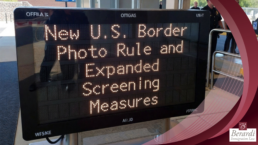
Effective December 26, the Department of Homeland Security (DHS) will require every non-U.S. citizen to be photographed upon entering and departing the United States. This marks one of the most sweeping biometric updates to border screening in years, affecting Canadians, permanent residents, visa-holders, and even groups previously exempt from photo collection, such as children under 14 and adults over 79.
This shift is part of a broader move toward enhanced national security and modernized vetting tools under the Trump administration. While the headlines may sound dramatic, the reality is more practical and far less intrusive for Canadian visitors than some media reports suggest.
As always, Berardi Immigration Law is here to help travelers understand what’s changing, what’s not, and how to prepare for smoother cross-border experiences.
Why the U.S. Is Implementing Mandatory Photos at Entry and Exit
The new policy is intended to strengthen U.S. immigration enforcement by improving the government’s ability to verify identities, detect visa overstays, and prevent document fraud. The technology behind this initiative is facial recognition–based biometric screening, and the photos collected may be stored in government systems for up to 75 years.
What This Means in Practice
- A brief photo will be taken during inspection, similar to a digital passport check.
- Travelers won’t need to pose or prepare; the system captures the image automatically.
- Minor delays may occur initially as new camera systems are installed and officers adapt to updated procedures.
Implementation will not happen everywhere overnight. DHS anticipates a 3–5-year rollout across airports, seaports, and eventually land borders as equipment becomes available.
No, Canadians Will Not Be Asked for Social Media Accounts
The photo requirement applies to all foreign nationals, including Canadians. But Canadians are not the target of another major policy development that has caused confusion: the proposed overhaul of the ESTA (Electronic System for Travel Authorization) used by citizens of visa-waiver countries such as the U.K., France, and Japan.
Under the DHS proposal, ESTA applicants would be required to provide:
- Five years of social media usernames
- Ten years of email addresses
- Five years of phone numbers
- Extensive family information (names, addresses, birth dates)
These requirements would be mandatory, not optional, and are designed to give U.S. authorities a deeper look at an applicant’s online footprint and personal network.
But Canadians do not use ESTA. They will not be asked for social media details, communication history, or family data when visiting the United States.
As Rosanna Berardi, Esq., Managing Partner of Berardi Immigration Law, puts it:
“There’s a lot of noise out there, but Canadians need to know this: Your border experience is not turning into a social-media interrogation. You’ll get your photo taken, and that’s about it.”
Understanding Traveler Concerns: What’s Real and What’s Exaggerated
Canadian media coverage has, at times, painted a dramatic picture: U.S. officers “scanning your face and scrolling your Facebook.” The reality is far more mundane.
The Truth for Canadian Travelers
- You will not be asked for social media usernames.
- You will be photographed at entry and exit.
- You may see new machines and cameras at inspection booths.
- You may experience slightly longer lines during rollout phases.
Many border officers already take photos as part of routine documentation checks. The difference now is that the photo requirement is universal and standardized.
This update also reflects a worldwide trend, numerous countries are adopting biometric entry-exit systems. In other words, this is not unique to the U.S., and it’s not going away.
Why DHS Says This Is Necessary
The Trump administration’s directive, issued in January 2025, calls for “enhanced identity verification” and more robust screening to keep potential security threats out of the country. DHS has positioned the photo rule and ESTA expansion as necessary tools for:
- Counterterrorism
- Reducing visa overstays
- Identifying identity fraud
- Enhancing compliance tracking
Whether these measures will accomplish their goals is the subject of ongoing debate. Many civil liberties groups argue the system is overly invasive and creates serious long-term privacy issues. Travel industry leaders warn the ESTA overhaul could deter tourism and complicate international mobility.
Impact on Travel: What to Expect in Early 2026
While the mandatory photo process is straightforward, travelers should prepare for minor procedural adjustments, especially during the first year of rollout.
Possible Changes You May Notice
- New facial-recognition cameras at inspection booths
- Slightly longer wait times at airports or land borders during equipment installation
- Additional signs or instructions from officers guiding travelers through updated procedures
The inspection itself should remain quick. Think of it as the digital equivalent of a passport photo being checked against your identity record; just faster and automated.
Will This Deter Canadians From Visiting the U.S.?
Some Canadian commentators are sounding alarms about declining cross-border travel, suggesting these changes will discourage visitors. While it’s true travel patterns have fluctuated in recent years, the new U.S. procedures are not nearly as burdensome as some fear.
Canadian travelers already comply with standard identity verification. Adding a photo, something many ports already do, is unlikely to be a major deterrent.
Still, this is a reminder that:
- The “good old days” of verbal declarations are gone
- Digital and biometric footprints are now part of international travel
- Transparency and honesty at the border remain essential
Takeaways for Travelers
- Mandatory photos are coming for all foreign visitors, including Canadians and green card holders.
- Canadians are not subject to new social-media vetting requirements. That policy targets ESTA travelers from Europe and other visa-waiver countries.
- Expect minor delays during rollout, particularly at airports in early 2026.
- Biometric data may be stored for decades, raising valid privacy considerations.
- This is part of a larger, global shift toward technology-driven border security.
Staying Informed, Prepared, and Confident at the Border
The bottom line? The new photo rule is a significant procedural update, but not a dramatic overhaul for Canadian visitors or other frequent travelers. As long as you’re prepared for a quick snapshot and aware of the broader shift toward digital screening, your travel experience should remain largely unchanged.
Berardi Immigration Law will continue monitoring DHS rulemaking, ESTA modernization, and biometric implementation so travelers and businesses can make informed decisions. If you have questions about cross-border travel, compliance, or how these changes may affect your specific situation, we’re here to help. Click this link to book your consultation today.
U.S. Border Photo Rule FAQs
Will Canadians be asked to provide their social media accounts when crossing the U.S. border?
No. The social-media proposal applies only to citizens of visa-waiver countries using ESTA, not Canadians.
How long will the U.S. keep the photos taken at the border?
Up to 75 years, according to DHS storage guidelines for biometric data.
Will this cause delays at the border?
Early implementation phases may move slowly as new systems roll out, but the photo itself is quick.




Ready to have Berardi on your side?
Whether you’re a business looking to hire or a professional hoping to relocate, immigration law can be complicated. But you don’t have to do it alone. Put our experience to work for you.